
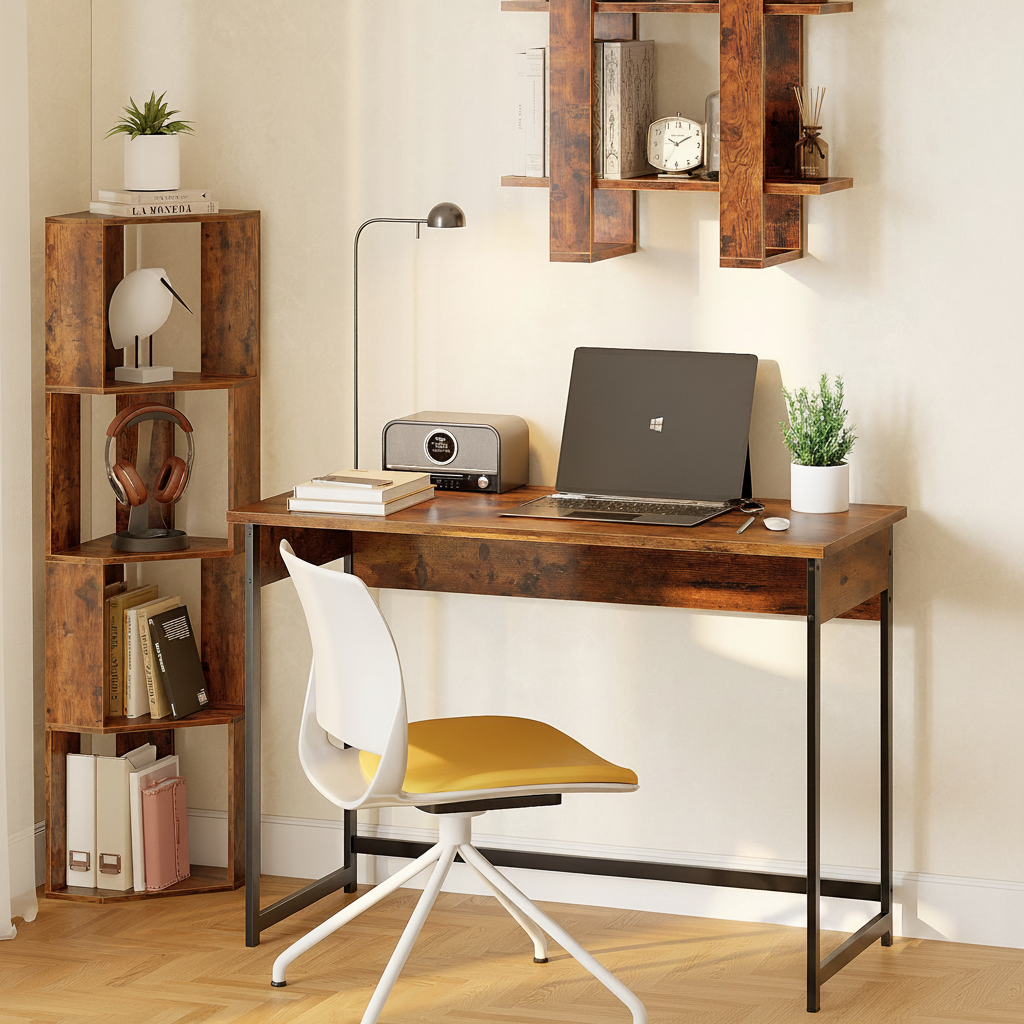
The reality of working from home is much different from what most home office guides show. Instead of a dedicated office, you may be working from a corner of your bedroom, a section of your living room, or even a converted closet. As living spaces continue to shrink, making the most of every square foot has become more important than ever.
The good news is that creating an efficient small desk setup doesn't require a large room—it requires thoughtful planning, smart furniture, and creative use of vertical space. With the right small desk, strategic placement, and practical storage solutions, you can build a workspace that's comfortable, organized, and productive.
In this guide, we'll cover the best small desk setup ideas, practical home office ideas for small spaces, and essential furniture that helps maximize both comfort and functionality.
Why Most Home Office Advice Doesn't Work for Small Spaces
Browse almost any "dream home office" article and you'll find oversized L-shaped desks, built-in bookshelves, and dedicated rooms with floor-to-ceiling windows. While those spaces look impressive, they aren't practical for most people living in apartments, condos, or smaller homes.
The real challenge isn't simply finding room for a desk—it's fitting an entire home office into a room that's already serving multiple purposes. Your workspace may share space with your bed, sofa, dining table, or entertainment center. That means every piece of furniture needs to maximize functionality without overwhelming the room.
The most effective approach is surprisingly simple:
-
Choose a small desk that fits your available space.
-
Position it where it receives plenty of natural light.
-
Add vertical storage instead of bulky cabinets.
-
Invest in furniture that serves multiple purposes.
A small room doesn't need less furniture—it needs smarter furniture that makes every inch count.
Small Desk Placement Ideas for Compact Rooms
Before purchasing any furniture, measure your available space carefully. Record the width, depth, nearby electrical outlets, windows, and door clearance to avoid buying furniture that doesn't fit.
For most people, a comfortable small desk setup requires approximately 40–54 inches of width and 20–24 inches of depth.
Against the Wall
Placing a small desk against a wall remains one of the most space-efficient layouts. It eliminates wasted space behind the desk while providing an ideal location for floating shelves, pegboards, or monitor arms.
Whenever possible, position the desk beside a window instead of directly facing or backing into one. Side lighting reduces glare while providing natural daylight throughout the workday.
Create a Floating Work Zone
If your walls are already occupied, consider using your desk as a subtle room divider.
A slim-profile modern desk positioned between the living and working areas naturally separates the two spaces without making the room feel crowded. This setup works particularly well in studio apartments and open-concept homes.
Make Use of Corners
Corners often become wasted space, yet they're ideal for creating a compact home office.
Position a small desk against one wall of the corner, then install floating shelves above or on the adjacent wall to maximize storage without increasing the desk's footprint.
Corner workstations also provide a naturally enclosed environment that helps improve concentration.
Turn a Closet into a Home Office
A closet can easily become a dedicated workspace.
Many standard closets are already deep enough to accommodate a compact desk. Simply add wall shelves above the desk, install adequate lighting, and use curtains or doors to hide the workspace after the workday ends.
This remains one of the smartest home office ideas for small spaces because it creates a separate office without sacrificing additional floor space.
Small Space Desk Placement Tips
-
Measure your available space before purchasing furniture.
-
Leave at least 30 inches behind your chair for comfortable movement.
-
Position your monitor perpendicular to nearby windows to minimize glare.
-
Face your desk toward a wall if you need fewer visual distractions.
-
Use a small area rug to visually separate your workspace from the rest of the room.
Essential Small Desk Setup Checklist
A productive workspace isn't defined by how much furniture it contains. It's defined by how efficiently everything works together.
1. Choose the Right Small Desk
Your small desk is the foundation of your workspace.
For everyday productivity, choose a desk that's at least:
-
40 inches wide
-
20 inches deep
-
28–30 inches high
This provides enough room for a laptop or monitor, notebook, keyboard, and other daily essentials without taking over the room.
Selecting the correct desk height also improves long-term comfort by reducing strain on your wrists, shoulders, and neck.
2. Raise Your Screen
One of the simplest ergonomic improvements is adding a monitor riser or laptop stand.
Keeping the top of your screen at eye level encourages better posture, reduces neck strain, and creates additional storage underneath for keyboards or office accessories.
3. Take Advantage of Vertical Storage
Small desks quickly become cluttered if everything must remain on the work surface.
Installing wall-mounted shelves above your desk dramatically increases storage while preserving valuable floor space.
Use vertical shelving for:
-
Books
-
Office supplies
-
Decorative accents
-
Plants
-
Storage baskets
Vertical storage effectively expands your workspace without increasing its footprint.
4. Upgrade Your Lighting
Overhead lighting alone rarely provides enough illumination for long work sessions.
A compact LED desk lamp with adjustable brightness creates a more comfortable work environment while reducing eye strain.
Clamp-on desk lamps are especially useful because they free up valuable desktop space.
5. Organize Your Cables
Messy cables instantly make a small office feel cluttered.
Simple cable management solutions include:
-
Adhesive cable clips
-
Under-desk mounted power strips
-
Cable sleeves
-
Cord organizers
Spending a few extra minutes organizing cables during setup makes your workspace cleaner and easier to maintain.
Small Desk Setup Checklist
✔ Small desk (40"+ wide)
✔ Monitor riser or laptop stand
✔ Wall-mounted shelves
✔ Adjustable desk lamp
✔ Cable management accessories
✔ Ergonomic office chair
✔ Optional side table or printer stand
The best small desk setup isn't the one with the most accessories—it's the one where everything has a purpose and nothing gets in your way.
Why Choosing the Right Desk Matters
In a compact home office, your desk serves multiple roles. It's your workstation, an important design element, and often one of the room's largest pieces of furniture.
A poorly made desk quickly becomes frustrating. It may wobble during meetings, sag beneath heavy equipment, or show wear after only a short period of use. Since the desk is always visible in a small room, these flaws become impossible to ignore.
A well-built modern desk remains stable, durable, and attractive for years of everyday use. Quality materials also make a noticeable difference.
Compared with inexpensive particleboard furniture, solid wood desks and high-quality plywood desks provide:
-
Greater stability
-
Longer lifespan
-
Better resistance to daily wear
-
Lower emissions than many low-cost laminated materials
-
A timeless appearance that improves with age
Because you'll likely spend eight or more hours at your desk every day, investing in quality materials improves not only durability but also the overall comfort and appearance of your workspace.
A thoughtfully designed small desk isn't simply another piece of furniture—it's the foundation of a productive, comfortable home office built to make the most of every square foot.
Share:
Dorm Room Furniture Essentials: What to Bring & What to Skip
Choose Smart Furniture for Small Apartments